The treasurer uses an accounting program. The president is able to access an entire file of documents that govern the company in cloud storage. Resident emails are distributed over personal inboxes. Photos of violations are on someone’s phone. Another board member knows the password to the website.
Everything is technically possible.
Finding the best one is an entirely different issue.
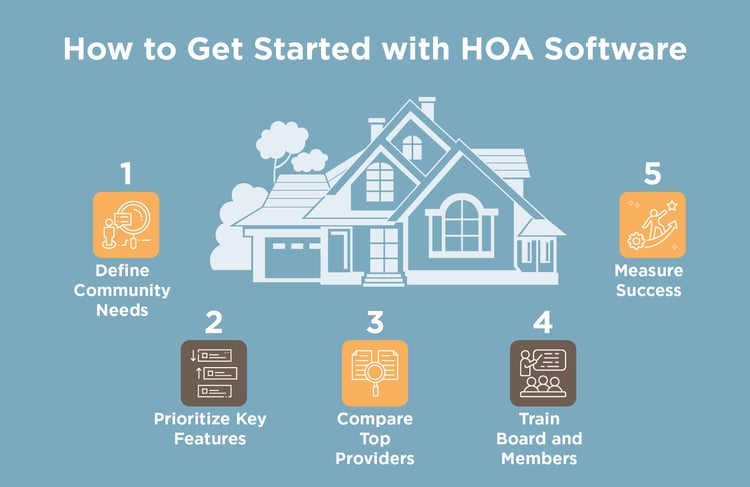
For a self-managed homeowners association administration can be complicated just one tiny solution at an time. The spreadsheet is a solution to one problem. Another issue can be solved with the group chat. Then the board adds online payments as well as shared storage, accounting software, a website and yet another method to communicate with residents.
Eventually, volunteers spend almost all of their time managing tools as they do coordinating the community.
The problem isn’t with self-management.
Self-management gives an association complete oversight over its operations. Board members are not paid administrative staff, but are volunteers.
They must still collect assessments, maintain details about the owner, track expenditures, keep in touch with residents, record violations, arrange files report, create reports and preserve records for future boards.
Good HOA management software should reduce that administrative load without taking control away from the association.
Perfect HOA achieves this by consolidating all records (units and finances, as well as payments and communications) along with documents, violations, resident portal and meeting minutes into a cloud-based system.
What happens if an owner leaves?
Instead of changing the address in a spreadsheet, modifying another list, examining a different payment system, and manually changing access to the website, centralized records can provide the information of the owner across the association’s administrative functions.
The Treasurer Doesn’t Need to rebuild the financial Picture
If information isn’t centralized, it could cause similar issues.
Bank transactions happen in one location. Assessment payments are made elsewhere. The budget can be another spreadsheet. When someone inquires about how expenditures compare to the annual plan and the treasurer is required to come up with the solution.
HOA Accounting Software can be more effective when it is integrated into the day-to-day operations of the organization.
Perfect HOA allows you to link your bank account and credit card activities with Plaid. You can categorize transactions and create reports, including Profit and Loss, Actual vs. Budget, and Cash Flow. Reserves, funds for operating and special assessments can be monitored in separate ways.
It’s essential to realize that HOA accounting doesn’t mean creating an annual sum. A board could need to determine if landscaping expenses are going over budget, or how much remains in a reserve account, or if assessment collections are on par with planned expenses.
The more simple these answers are to locate the less dependent the community becomes to one individual’s private spreadsheet.
Residents shouldn’t be required to inquire what’s happening.
Centralization can improve the resident experience too.
Imagine the most frequently asked concerns an HOA gets. What are my papers? Did my money get paid? How do I find the latest notice? Where can I get access to association information?
A good HOA site builder will do more than just create a home page for the public. Perfect HOA connects the community website with a resident portal in order that the owner’s information and documents are able to be linked to the management system that is in place.
This means there’s no need to have two separate sets of data that are separate for the board and the separate one for the site.
This also means that residents have a logical place to look prior to contacting the board members of a volunteer organization for an item that is already present.
When things go wrong it’s essential to have accurate records.
The test that truly tests an HOA’s administration system is usually months after.
A resident disputes the violation. Someone asks if a notice has been issued. A new board wishes to know the reasoning of an old decision. An auditor needs financial information. A treasurer resigns unexpectedly.
Memory is no longer sufficient.
Perfect HOA will keep track of the entire history of communication documents, delivery details, and timelines for violations. A violation can include photographic evidence such as notices, escalation records, notices as well as related fines than being assembled from scattered emails when a dispute is triggered.
Board meetings can also create records which someone must preserve. Meeting minutes that are created by AI could aid in reducing the time and effort to convert a lengthy meeting into a practical recorded document.
The homeowners will always have to make the choices when managing an HOA. Software shouldn’t replace that responsibility.
You should stop all unnecessary investigations.
When all the information – residents’ information as well as financial records, payments, documents and violations – are in one place the board members will be less likely question “Who is the owner of this information?” and can focus on the problem to be addressed.
It is perhaps the most important aspect of automation to a board of volunteers.